
Voice Clinical Systems®
Biomechanical Parameters
Biomechanical Correlates include information relating to vocal fold dynamics during phonation. Their clinical interpretation is key for the screening and characterisation of voice pathology, whether organic or functional in origin.
Parameter table
The 22 biomechanical correlates
| # | Parameter name | Unit | Clinical value |
|---|---|---|---|
| 01 | Fundamental Frequency (F0) | Hz. | Number of times the vocal folds vibrate per second in the analysed sample. |
| 02 | Closing cycle ratio | u.r | Establishes the cycle ratio in the closing phase between the free edges. |
| 03 | Degree of asymmetry | u.r | Asymmetry in the free-edge dynamics during the open phase. |
| 04 | Closed phase | % | Percentage of time during which the free edges remain in contact. |
| 05 | Open phase | % | Percentage of time during which the free edges remain separated. |
| 06 | Opening phase | % | Percentage of the closed phase with separation dynamics. |
| 07 | Closing phase | % | Percentage of the closed phase with approximation dynamics. |
| 08 | Tension index | u.r | Tension associated with the free edge. |
| 09 | Glottic closure force | u.r | Additional push or constriction of the glottic space. |
| 10 | Efficiency index | u.r | Energy utilisation during voice production. |
| 11 | GAP amplitude | u.r | Permanent separation relative to the midline between both free edges. |
| 12 | GAP size | u.r | Incomplete glottic closure in relation to the closed phase. |
| 13 | Cycle instability index | u.r | Instability or inability to maintain stable tension. |
| 14 | Amplitude variation index | u.r | Instability or inability to maintain stable amplitude. |
| 15 | Vibration blocking index | u.r | Free-edge vibration losses. |
| 16 | Amplitude index | u.r | Separation between vocal fold edges relative to the midline. |
| 17 | Mucosal wave index in closed phase | u.r | Mucosal wave correlate observed during the closed phase. |
| 18 | Mucosal wave index in opening phase | u.r | Mucosal wave correlate observed during the opening phase. |
| 19 | Mucosal wave alteration in closed phase | u.r | Degree of mucosal wave alteration (Oedema or Fixation) in the closed phase. |
| 20 | Mucosal wave alteration in opening phase | u.r | Degree of mucosal wave alteration (Oedema or Fixation) in the opening phase. |
| 21 | Structural imbalance index | u.r | Refers to a non-significant or compensated glottic impact. |
| 22 | Mass alteration index IG | u.r | Correlates with a possible structural alteration in the free-edge mass. |
Advanced analysis
Imbalance profile
– – Dashed line = Bipolar parameter
↑ Upward arrow = Higher value
↓ Downward arrow = Lower value
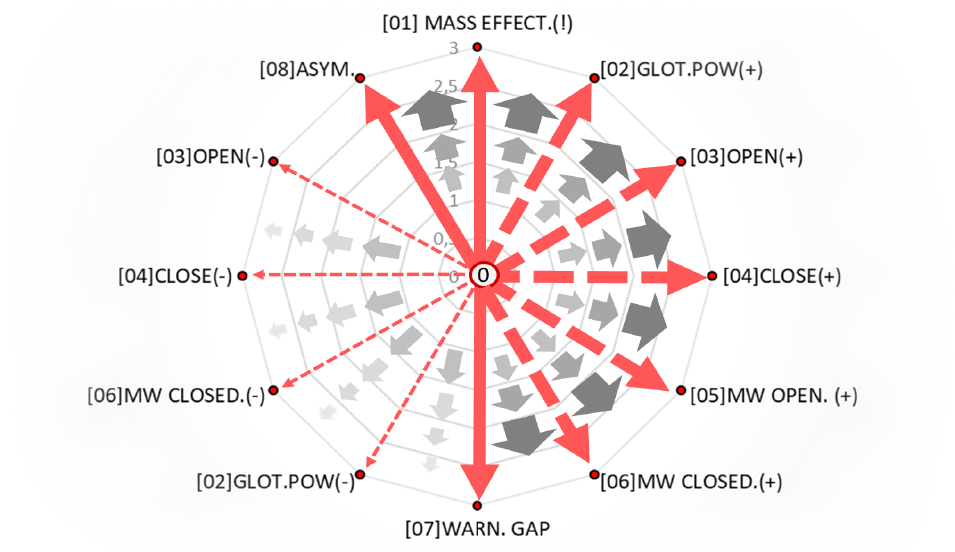
Correlates with the presence of a structural alteration with mass effect, causing changes in glottic closure and the vibratory pattern of the vocal folds.
(+) Excessive tension in the musculature involved in glottic closure.
(−) Insufficient tension in the musculature involved in executing and maintaining glottic closure.
(+) Imbalance due to increased open-phase duration.
(−) Imbalance due to decreased open-phase duration of the vocal folds.
(+) Imbalance due to increased closed-phase duration.
(−) Imbalance due to decreased closed-phase duration of the vocal folds.
(+) Increased mucosal wave during phonation, differentiating open and closed phases.
(−) Decreased mucosal wave during phonation.
Indicates the presence of a significant GAP. Marks the loss of contact between the free edges of the vocal fold.
Refers to the probability of a different involvement or dynamics between both free edges of the vocal folds.
Dynamic visualisation
Dynamic Profile
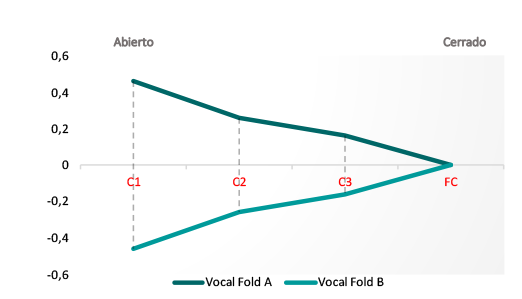
Closed Dynamic Profile
Represents the free-edge dynamics assuming symmetry in the movement between both vocal folds. It captures the dynamics from the end of the open phase to the end of the closed phase.
It allows assessment of how the free edge approximates and visualises the mucosal wave effect, evaluating the normality of the closure mode and duration.
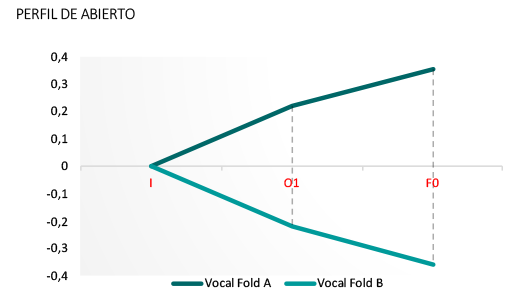
Open Dynamic Profile
Represents the free-edge dynamics assuming symmetry in the movement between both vocal folds. It captures the dynamics from the end of the closed phase to the end of the opening phase.
It allows assessment of the manner in which the free edge separates, its amplitude, the duration of the phase and the associated mucosal wave.
Graphical representation
Biomechanical Wave
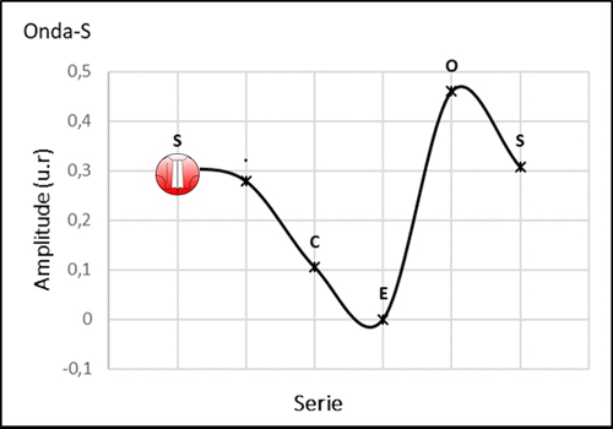
S Wave
Represents the sequential arrangement of reference points omitting the temporal period value. It allows identification of all points present, even when they overlap in time.
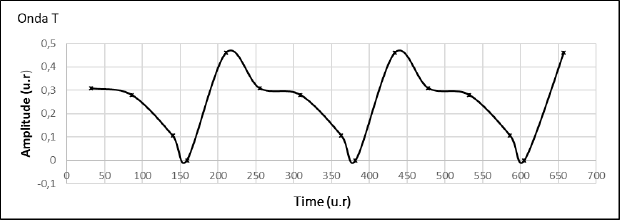
T Wave
Biomechanical wave considering the period value of each reference point. Several consecutive cycles are shown. Real wave linked to the temporal factor.
Reference Points
They allow identification of the different segments that determine the cycle phases:
Starting point of the closed phase.
Intermediate amplitude point in the closed phase.
End point of the closed phase and start of the open phase.
Appears in biomechanical alteration. Indicates an unwanted closure during the open phase.
Appears in biomechanical alteration. Indicates an unwanted closure during the open phase.
R points (R1, R2,…) represent unwanted openings during the closing phase. Associated with biomechanical alteration and/or lesion.
Vocal diagnosis
Voice Screening
Pathology Screening
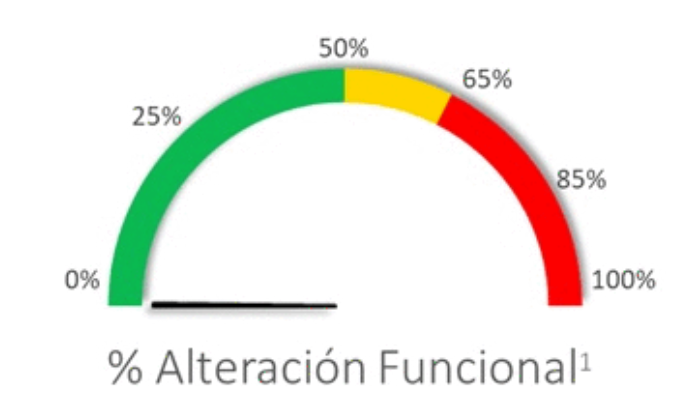
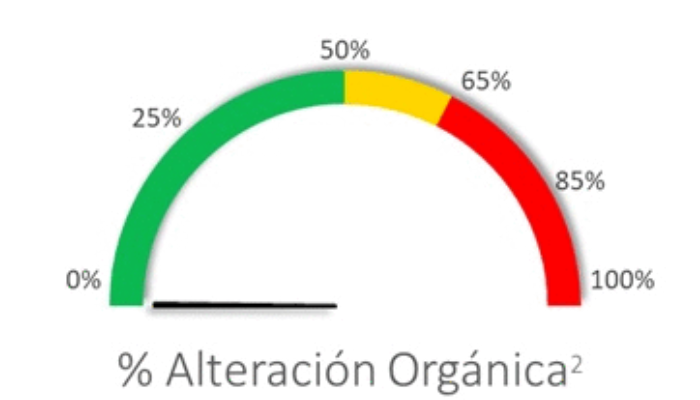
Allows the percentage of functional or organic alteration associated with a patient’s voice to be established, with an easy-to-understand graphical representation.
The percentage of alteration is independent for functional and organic pathology — they may coincide or be completely independent. This will depend on the pathology and the patient’s compensation mode.